
We live in a world that constantly nudges us toward what is missing. Between unread inbox numbers, tight project deadlines, and endless social media highlights, it is remarkably easy to drift into a mindset of scarcity and stress. This is where an intentional gratitude practice comes in.
Gratitude is not about ignoring life’s genuine challenges or putting on a smile when things are tough. Rather, it is a deliberate shift in attention. It is the conscious choice to notice and appreciate what is going well, no matter how small.
Why bother? Science shows that regularly practicing gratitude reshapes neural pathways, reducing cortisol levels, improving sleep quality, and boosting emotional resilience. How do you start? By creating small, repeatable habits that anchor your attention on positive experiences throughout your workday.
Here are seven practical tips to cultivate a realistic, impactful gratitude practice:
- Attach it to an existing routine. Link your moment of reflection to something you already do every day. Expressing thanks while your morning coffee brews or while waiting for your laptop to boot up creates a friction-free habit loop.
- Focus on micro-moments. You do not need massive milestones to feel grateful. Notice the small stuff: a colleague who answered a question quickly, a clear calendar block, or a comfortable chair during a long meeting.
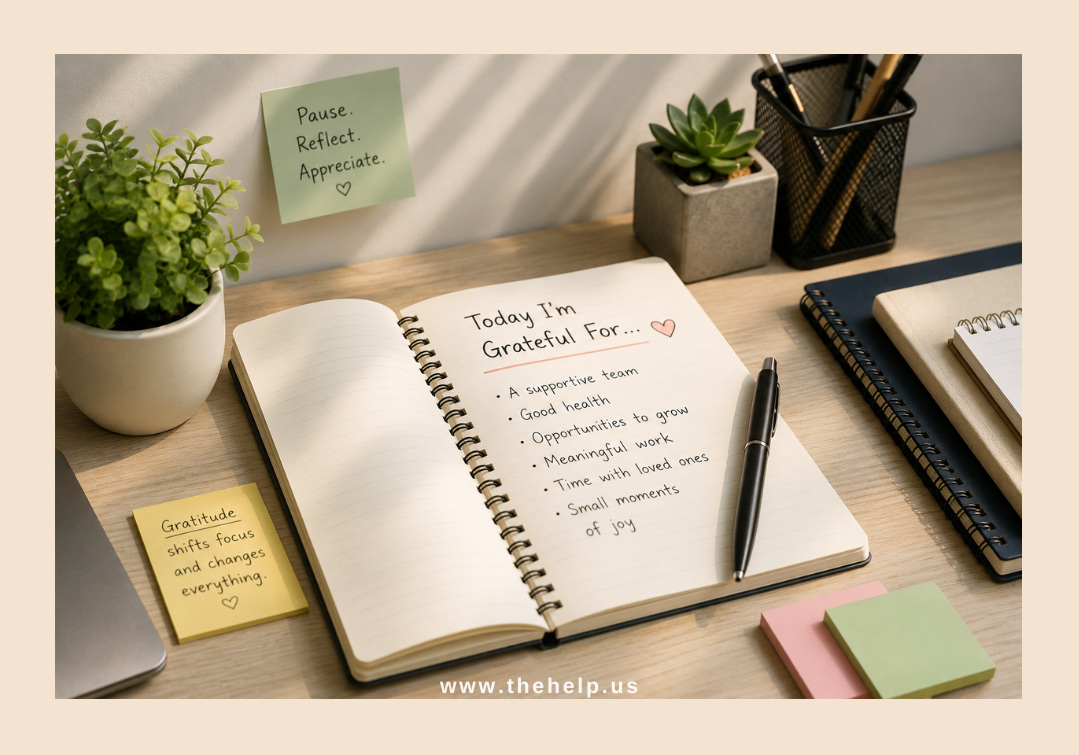
- Keep a physical low-tech log. Keep a notebook on your desk dedicated solely to quick wins and good moments. Writing by hand engages different parts of the brain than typing, helping the positive feelings sink deeper.
- Send one unexpected thank-you note a week. Reach out to a coworker, vendor, or mentor just to appreciate something specific they did. Spreading recognition reinforces your own awareness of support systems around you.
- Reframe workplace friction. When a project hits a roadblock, ask yourself: What is this situation teaching me? or What resource am I thankful to have while tackling this problem? This shifts your brain from panic to problem-solving.
- Practice “gratitude subtraction.” Instead of just listing good things, imagine your workday without a specific comfort or helpful tool, like reliable Wi-Fi or a supportive teammate. Realizing how much worse things could be naturally raises appreciation for what is present.
- Close your workday with a wind-down review. Before shutting down your computer, write down three things that went right. This creates a clear boundary between work and personal life, allowing you to transition into your evening with a sense of completion.
Building a daily gratitude habit does not require hours of meditation or drastic lifestyle changes. By making small, consistent adjustments to how you review your day, you gradually train your brain to default to perspective rather than pressure. Over time, this simple mindset shift builds lower stress levels, stronger working relationships, and a far more fulfilling daily routine.
What are some ways you practice gratitude during a busy workweek? Share them with us in the comments. Remember to work smart and be a blessing to someone today. Stay safe and healthy!
Written by Jaie O. TheHelp